_PNG.png)

SILENZIO - MARCOLIN PROJECT
FULL VIDEO
3D ANIMATION
PROJECT OVERVIEW
The Marcolin x NYIT collaboration was created to imagine the future of eyewear through a combination of design research, medical knowledge and advanced 3D visualization. Marcolin offered professional guidance and industry insight, while NYIT contributed research in health, design, and technology. I worked in a multidisciplinary team of four people: two medical students, one architecture student, and myself as the digital artist and 3D designer. This unique mix of skills allowed us to merge design thinking with anatomical understanding and neuro-sensory analysis. Together, we developed the project that ultimately won the Marcolin competition: Silenzio.


Double click for full image
SILENZIO Neuro-Inclusive Eyewear Concept
2. Core Vision
Silenzio was created as eyewear that helps individuals find calmness in overstimulating environments. The concept focuses on visual comfort, emotional balance, and personal identity. The idea of a “visual halo” became central to the project, creating a small bubble of clarity around the wearer. The medical students in the group contributed research on sensory overload, human perception, and neuro-inclusive design principles, which guided the direction of the lenses and color transitions. The name Silenzio refers to inner clarity and the ability to filter external noise without isolating from the world.
3. Design Philosophy
Sensory Comfort
Silenzio uses gradient lenses designed to soften harsh visual input and reduce overstimulation. The gradients were shaped based on medical insights from the team, ensuring they support comfort without darkening the overall environment.
Emotional Identity
The frame gives the wearer a clear and memorable silhouette. Its form expresses calmness and personal space, while remaining minimal and elegant. The architecture student contributed structural understanding and proportional balance, and I translated these elements into the final visual identity.
Technological Elegance
The design integrates subtle technological cues inspired by AI aesthetics. Light, internal line structures, and gradient modulation introduce a futuristic character without relying on external devices or visible electronics.
4. Key Features of the Silenzio Line
Gradient Lenses
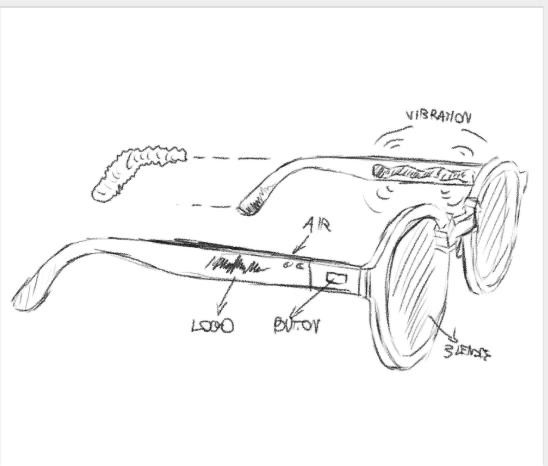
The lenses include custom color transitions that reduce visual noise. I developed a custom lens shader in Blender with realistic optical thickness, refraction, and physical accuracy. The gradients are adjustable and adaptable to different user needs.
Emission Halo
Silenzio includes a soft luminous halo inside the frame. This glow supports identity and calmness. I created a procedural emission system in Blender that controls intensity, color, and softness. The halo produces a gentle atmosphere around the wearer.
Internal Line System
The internal lines of the frame were inspired by neural pathways and the rhythmic patterns of breathing. These lines reflect the biological and sensory research of the medical students. In the 3D model, I generated them through layered procedural textures, giving the frame depth, meaning, and complexity.
Ergonomic Geometry
The geometry of the frame was shaped for comfort across various face types. The bridge distributes weight evenly, the arms curve inward gently, and every surface is smooth and continuous. The architecture student supported the ergonomic analysis, and I executed the full modeling process in Blender.
Variants of Silenzio
Silenzio is presented as a family of products.
Silenzio Luce focuses on the luminous emission.
Silenzio Notte removes the glow for a pure minimal aesthetic.
Silenzio Vento introduces subtle movements in the internal lines that react visually to motion.
All 3D prototypes and renders were created by me.
5. My Role in the Project
Concept Development
I led the creative direction of Silenzio, transforming the team’s research from the medical and architecture perspectives into a coherent design focused on calmness and emotional well-being.
Technical and 3D Execution
I modeled the entire frame and lenses in Blender, refined every surface, and created all custom shaders, including the gradient lenses, emission halo, and internal line system. I also produced the final renders, visualizations, and animations used for the presentation.
Team Integration
I worked closely with the two medical students to translate sensory research into tangible visual behaviors, and with the architecture student to refine proportion, structure, and comfort. The team’s diverse expertise shaped the project, and my role was to unify everything into a complete, polished product vision.
6. Impact and Recognition
Silenzio won the Marcolin x NYIT design competition and was recognized for its innovation, interdisciplinary depth, and emotional intelligence. The project demonstrates how eyewear can evolve into a tool that supports neuro-inclusive design, personal identity, and new forms of visual comfort. It also highlights the potential of integrating medical research, architectural thinking, and digital art into the creation of future wearable products.
LINK TO OFFICIAL ARTICLE